

A New Name for a Broader Product
In an earlier Startup Journey post, we hinted at a turning point in our company story. This is the moment where BugBattle became Gleap: a new name, a clearer identity, and a better reflection of what the product had grown into.
BugBattle started with a focused promise. We wanted to help teams capture better bugs and fix them faster. That mission mattered then, and it still matters now. But the product kept expanding because our customers needed more than issue capture.
They wanted to collect product feedback, understand users, manage feature requests, run surveys, and communicate with customers in one place. The name BugBattle still described an important foundation, but it no longer told the full story.
Why BugBattle Became Too Narrow
The original name made sense when the product centered on in-app bug reporting. It was direct, memorable, and tied to a real pain point for development teams.
Over time, the platform became broader. Customers were not only reporting defects. They were asking questions, voting on ideas, sharing feedback, and helping teams understand what to build next. We needed a brand that could grow with that direction.
That was the strategic reason for the rebrand. We were not leaving bug reporting behind. We were placing it inside a bigger feedback system.
The Idea Behind Gleap
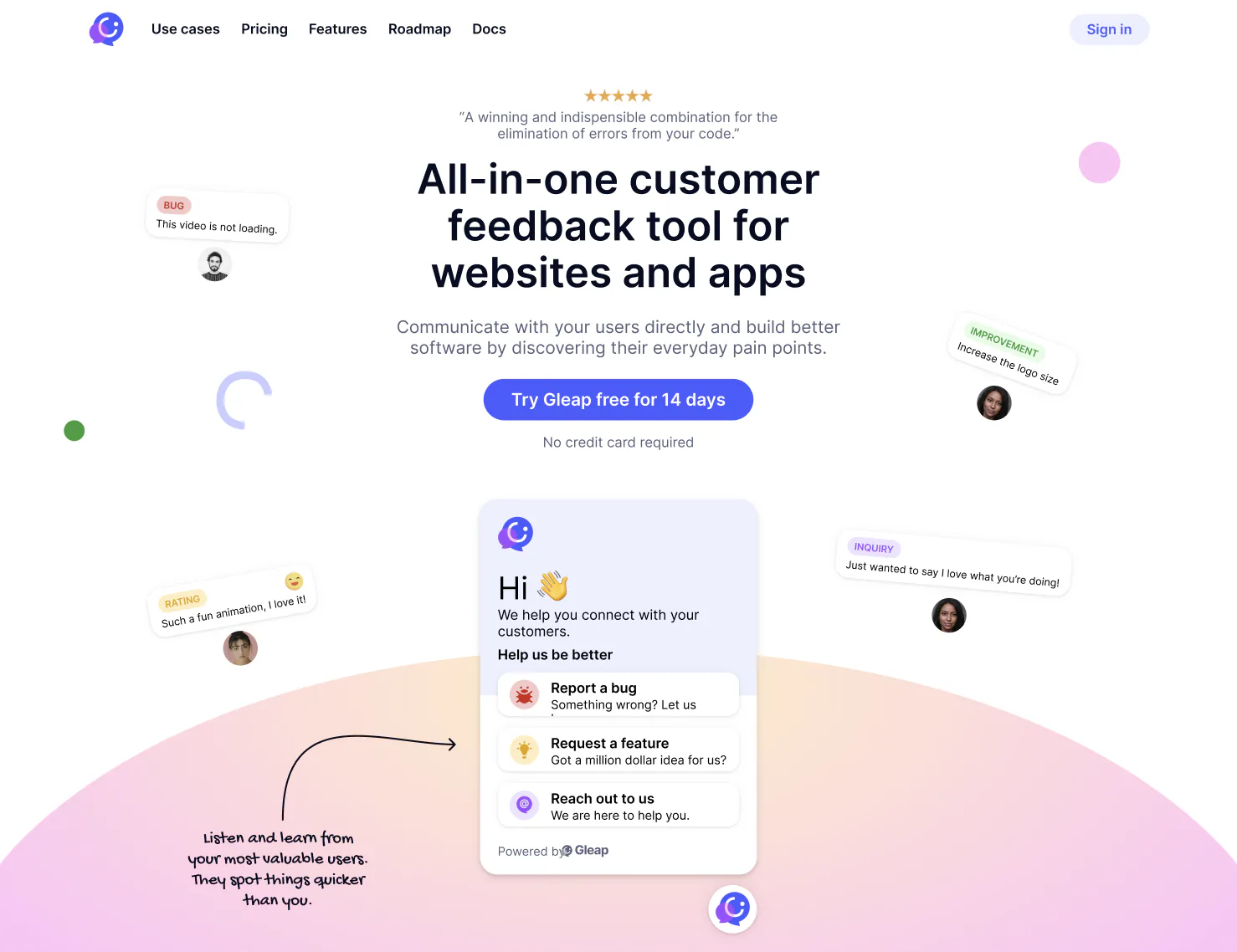
Designer Daryl Ginn helped us explore a name and visual identity that felt more aligned with where the product was going.
Gleap brought together two ideas:
- Leap: the progress teams make when they understand their users faster.
- Glee: the delight of building better experiences with less friction.
That may sound simple, but it mattered. The new name gave us room to talk about the whole customer feedback lifecycle: reporting issues, collecting insights, prioritizing requests, closing the loop, and building a product people enjoy using.
Launching the New Brand on Product Hunt
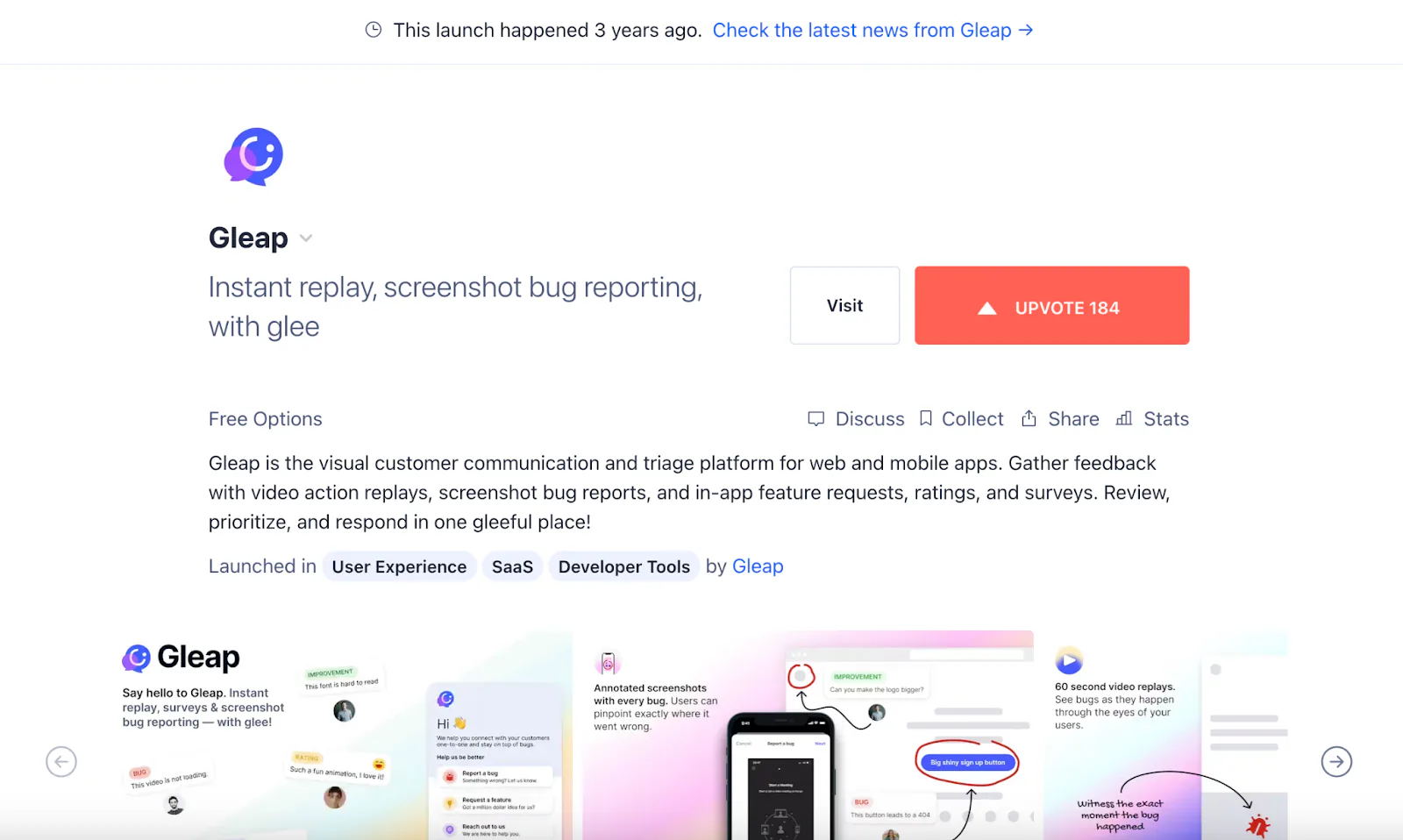
Around the same time, we launched Gleap on Product Hunt. The launch gave us a public moment to tell the new story and introduce the product to founders, product managers, developers, and support teams.
We worked with Chris Messina on the launch strategy, and the Product Hunt launch became a useful learning experience. It created conversations with early adopters, surfaced sharper positioning questions, and helped us see which parts of the product story resonated most.
We shared more lessons from that launch in our post about what we learned from working with an experienced Product Hunt launch partner.
What Changed After the Rebrand
The rebrand was not just a new logo and website. It changed how we talked about the product, which teams we served, and how we thought about the problems we were solving.
Bug reporting remained core, but it became part of a wider workflow:
- Capture issues and technical context.
- Ask targeted customer feedback surveys.
- Collect and organize feature requests.
- Help support teams respond faster.
- Close the loop when improvements ship.
That broader framing helped us build for product, support, and customer success teams together instead of treating feedback as a single-channel process.
Looking Ahead
Gleap has continued to evolve since that moment. The platform now includes AI-powered support through Kai, multichannel customer communication, feedback collection, roadmap workflows, and the bug reporting foundation that started it all.
Looking back, the rebrand was a commitment: we wanted to help teams do more than fight bugs. We wanted to help them understand users, act on feedback, and build better customer experiences with clearer context.