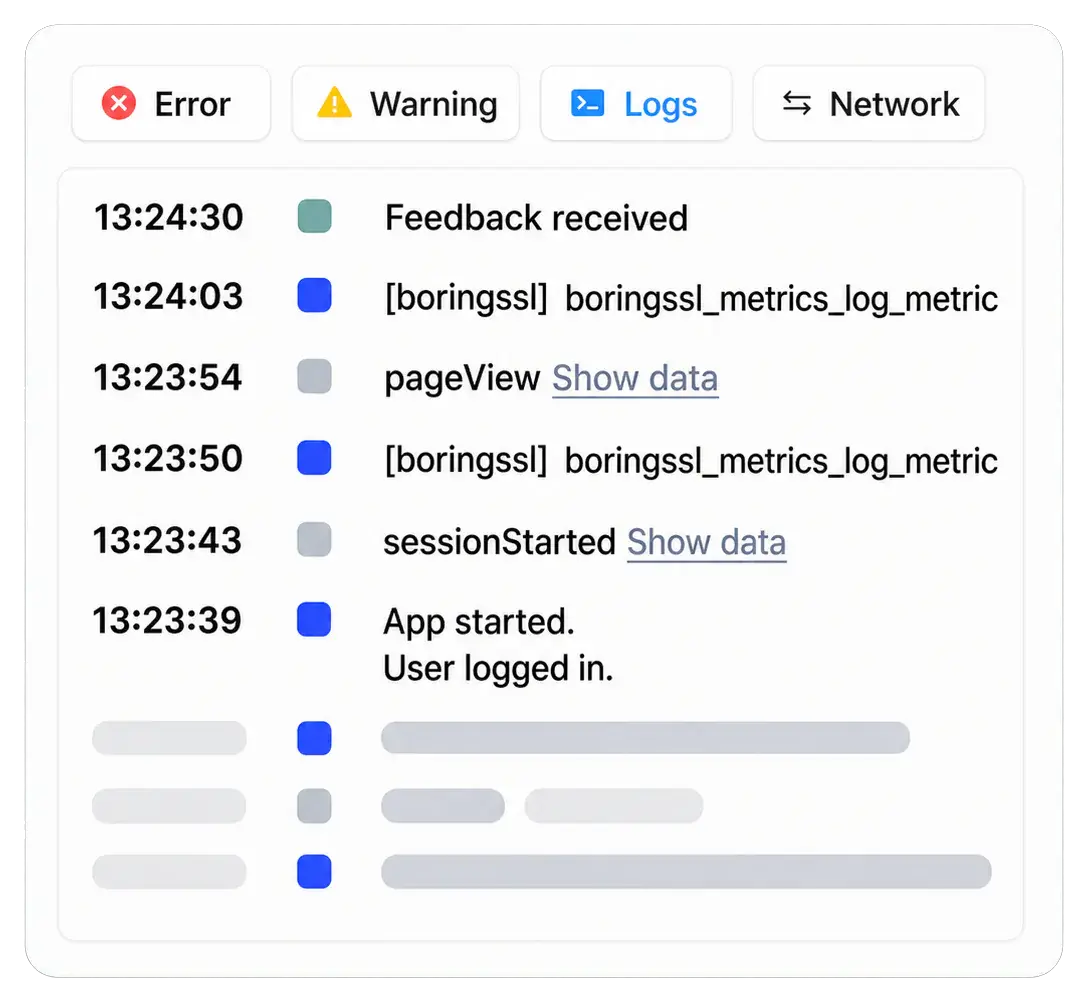
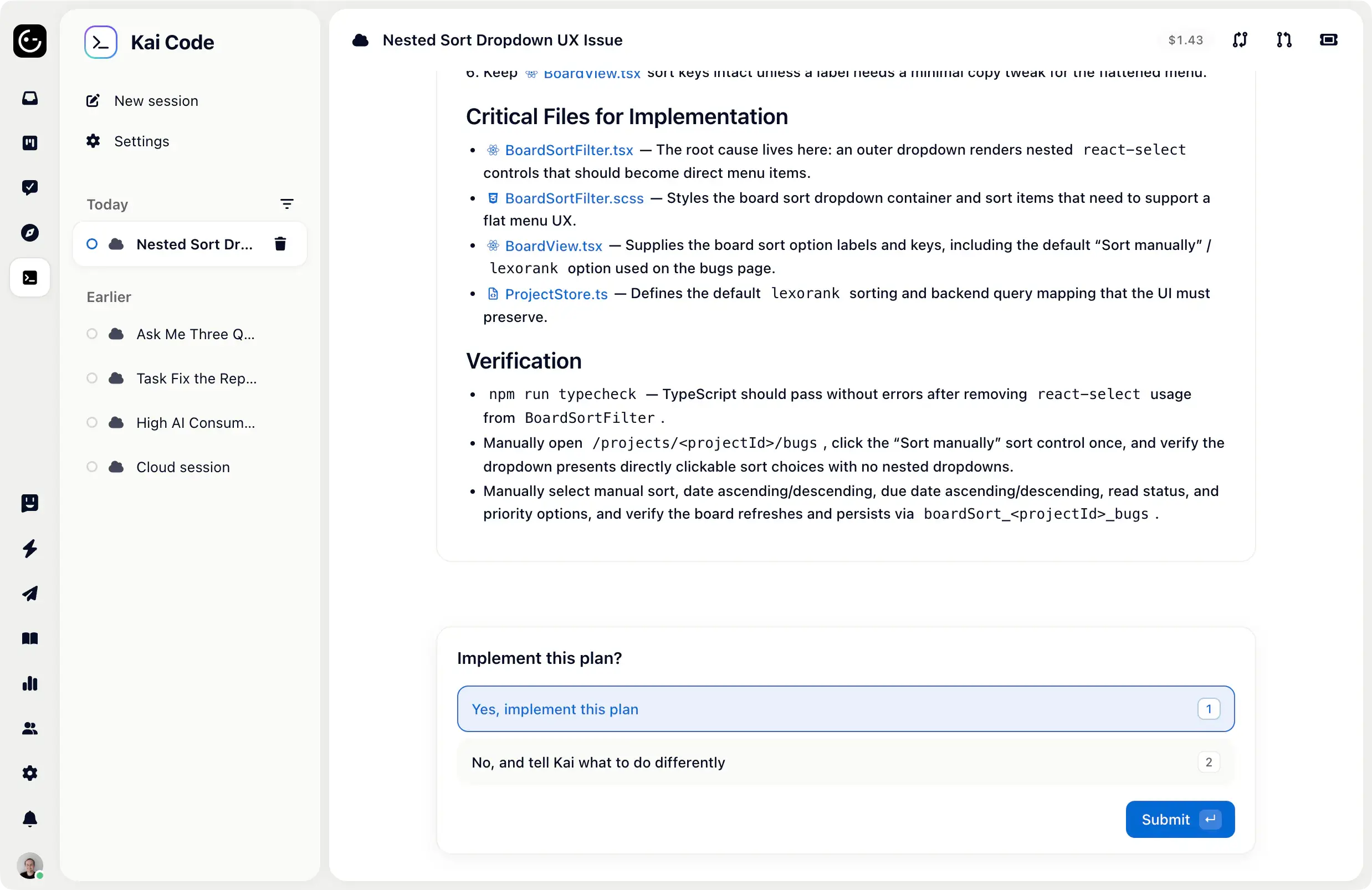
Customers report the bug once. Kai Code starts with the session replay, console errors, network requests, device state, browser, OS, screen details, and affected customer impact needed to plan a fix.
Kai Resolve sends confirmed bugs
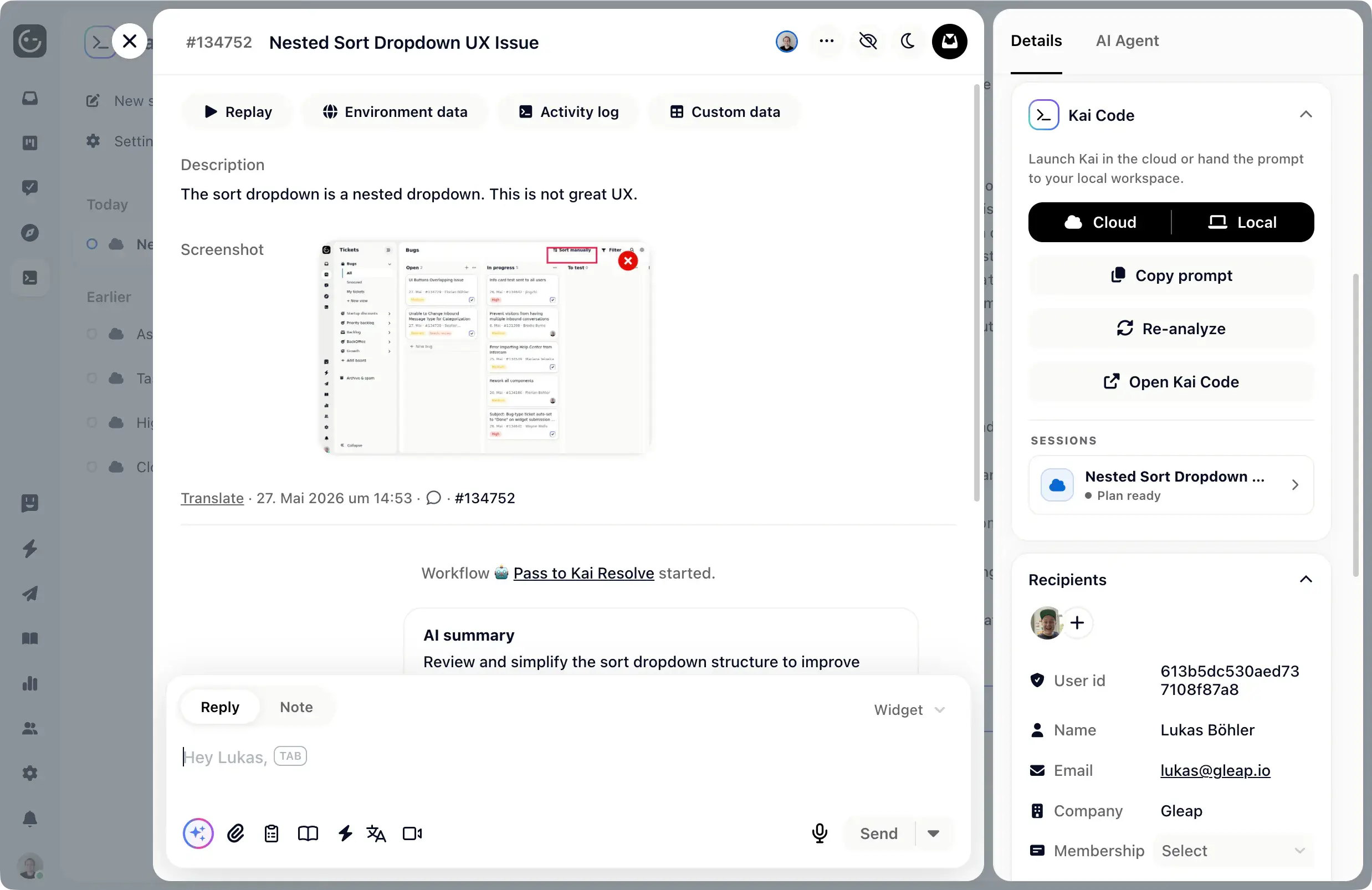
When Kai support cannot solve an issue directly, Kai Resolve investigates with MCP, connected tools, source context, read-only data, APIs, and ticket history. Confirmed bugs move to Kai Code with the affected area, reproduction path, severity, and customer impact attached.
Inspect every change
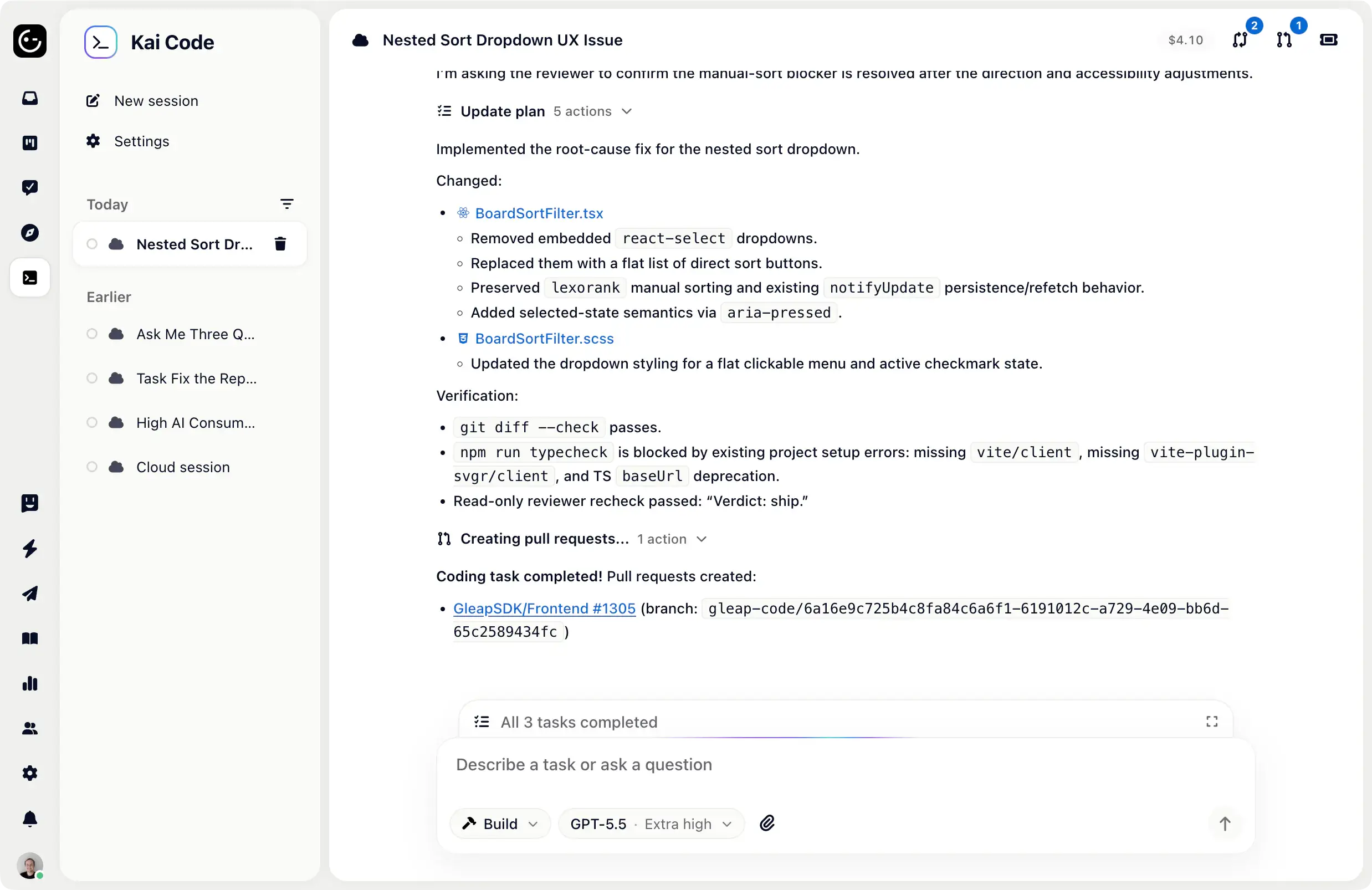
Built-in code and diff viewer.
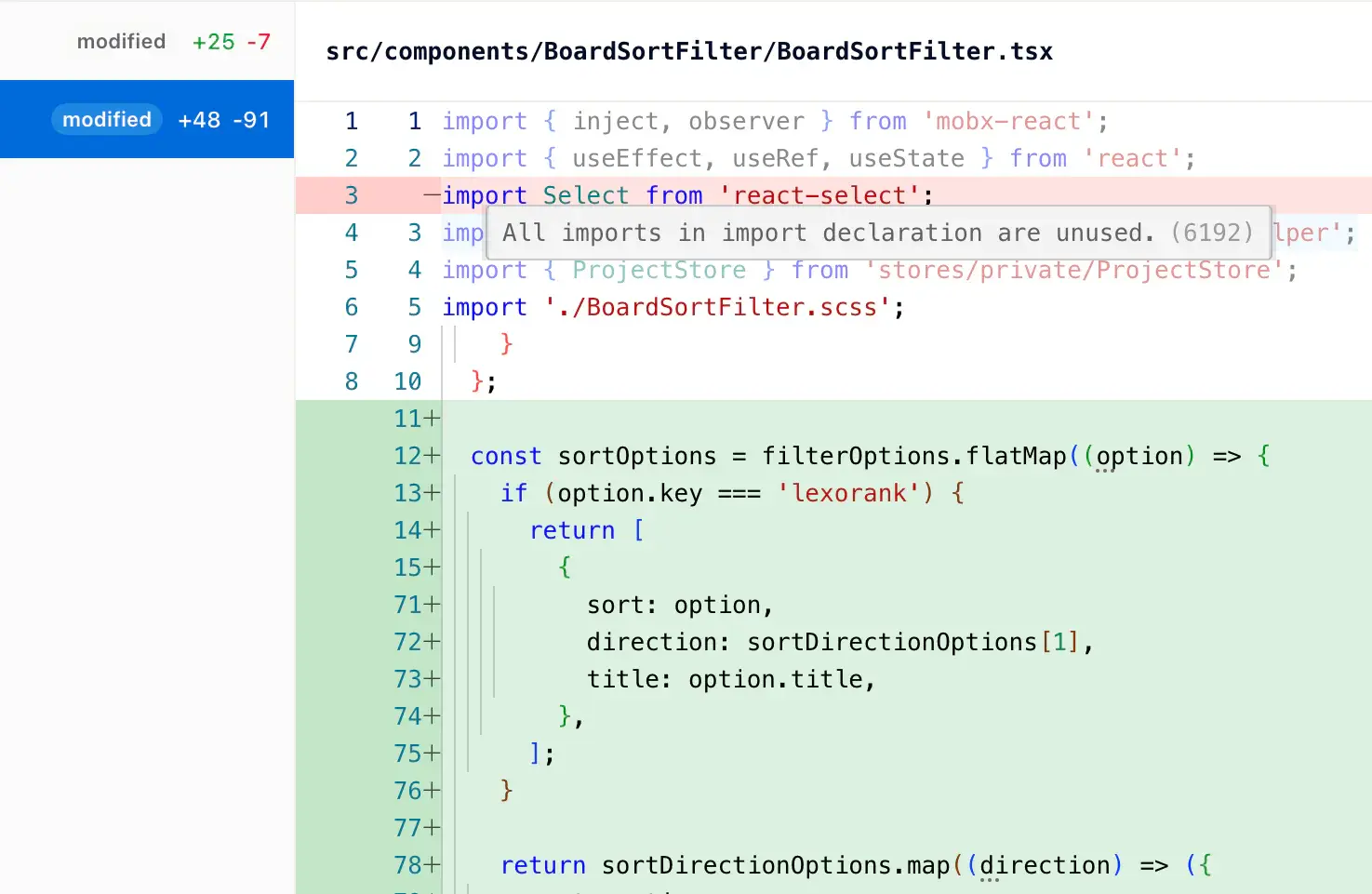
Kai Code does not just open a pull request and disappear. Every run includes a built-in code viewer and unified diff viewer, so your team can inspect changed files, additions, deletions, lint notes, and the final patch right inside Gleap before jumping to GitHub.
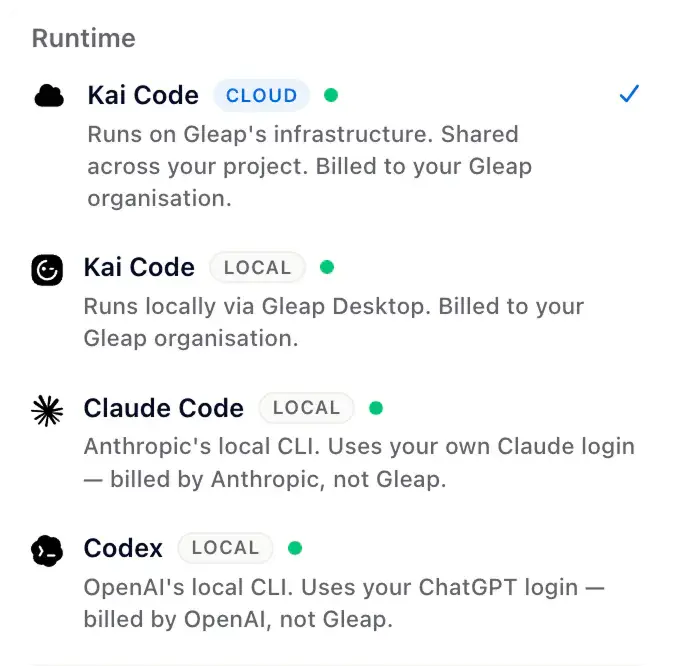
Use Kai Code in Gleap Cloud with frontier and open-source models, or connect your local Claude Code, Codex, or OpenCode setup. Bugs flow from Kai Resolve. Feature specs flow from Kai PM. Kai Code plans, builds, opens the PR, and hands the release loop back to the customer-facing agents.
Salesforge imported contacts and help center articles in minutes, then moved support, roadmap, news, outreach, and Slack into one Gleap workspace.
10 days
To full integration
Partfox fully integrated Gleap with custom data and unlocked live chat, AI support, bug reporting, feature requests, product tours, checklists, and surveys.
50-60%
Inbound support handled by Kai
Commonplace uses Gleap for feedback, support, knowledge base, roadmap work, JIRA, HubSpot, and Kai-powered first-line support.
What teams say about Gleap
“One platform, less hassle, and smarter support.”
Gleap has transformed how Tridonic manages customer experience by streamlining feedback, support, and automation.
Elif Kavas
DX, Tridonic
“Essential to our development process.”
Gleap was implemented within minutes and helps MARK.ONE fix bugs quickly while building real customer relationships.
Mark Breuß
Founder, MARK.ONE
“Super-fast turnaround on feature requests.”
Transaction Network Services highlights the Gleap team’s turnaround on new feature requests as part of reducing errors in the product.
Martin Hardman
Transaction Network Services
About Kai Code
What is Kai Code?
Kai Code is Gleap's AI coding agent and IDE for self-driving development. It takes confirmed bugs from Kai Resolve and approved feature specs from Kai PM, enters plan mode, moves into build mode, runs checks, opens a pull request, and helps close the customer loop after merge.
Can Kai Code use my existing local coding setup?
Yes. Kai Code can run in Gleap Cloud with frontier and open-source models, or work through your local Claude Code, Codex, or OpenCode setup. The workflow stays the same: plan mode, build mode, pull request, review, merge, customer notification.
How does Kai Code work with Kai PM and Kai Resolve?
Kai Resolve routes confirmed bugs to Kai Code with the investigation, replay, logs, source context, and customer impact attached. Kai PM turns feature demand into prioritized specs, then hands approved work to Kai Code for implementation. Kai Code plans, builds, opens the PR, and returns the release loop to the customer-facing agents.
What codebases does Kai Code work with?
Kai Code is designed for connected product codebases where Gleap can provide customer context, replay, logs, and source access. It works across common web, mobile, and backend stacks, then uses the connected repo to plan and build the fix.
What's the difference between Kai Code and Instabug or Usersnap?
Instabug, Usersnap, Marker.io, and BugSnag capture bug reports. Kai Code is built for self-driving development. It receives confirmed bugs with replay, logs, and reproduction context, plans the fix, builds it, opens a pull request, and notifies the users who reported the bug once the fix ships. See the Instabug alternative and Usersnap alternative pages.
Is Kai Code GDPR-compliant?
Yes. Mask sensitive input fields from session replays. Block specific network endpoints from logging. Anonymize user data automatically. SOC 2 Type 2 audited. EU data residency available on Enterprise plans.