

Customer retention is the quiet part of growth. Acquisition brings people in, but retention proves that your product keeps earning attention after the first login, first purchase, or first support conversation.
For SaaS and mobile teams, retention is not one tactic. It is the combined effect of onboarding, product reliability, support quality, feedback loops, and communication. A customer stays when they understand the value, can reach it repeatedly, and trust that your team will help when something gets in the way.
This guide focuses on the practical retention work teams can control: measuring the right baseline, finding the moments where users drift, and using product-led systems to bring them back.
Retention Starts with a Clear Definition
Customer retention measures the percentage of customers or users who remain active over a chosen period. The definition of “active” should match the product:
- A project management app might count a retained account when a team creates or completes tasks.
- A support platform might count retained customers when agents continue resolving conversations.
- A mobile subscription app might count retained users when they open the app and use a core feature.
Avoid defining retention as “logged in.” A login can be a weak signal. Retention should point to repeated value, not just repeated access.
For teams working on activation, the retention conversation starts even earlier. A user who never reaches the first useful outcome is already at risk. That is why a strong SaaS onboarding journey is usually the first retention lever to inspect.
How to Calculate Retention Rate
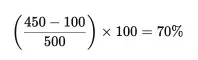
The standard retention formula is:

If you start the month with 500 active users, add 100 new users, and end with 450 active users, the retained base is 350 users. That gives you a 70% retention rate for the period.
The formula is useful, but the period matters. Track retention in cohorts so you can compare users who joined under similar conditions. A monthly average can hide a broken onboarding flow, a weak release, or a segment that needs a different customer success motion.
Why Retention Breaks
Most churn is not caused by one dramatic event. It usually builds through small unresolved moments:
- The user never reaches the first meaningful outcome.
- A key workflow is slower or more confusing than expected.
- A bug blocks progress and the user does not know how to report it.
- Support takes too long to answer.
- Product changes are shipped without enough context.
- The customer does not see a path from their request to your roadmap.
Retention improves when teams remove these small moments systematically. That means support, product, customer success, and marketing need a shared view of user friction.
Build an Onboarding Path That Leads to Value
Retention is easiest to influence during onboarding because user motivation is still high. The goal is not to show every feature. The goal is to guide the user to the first outcome they came for.
Use onboarding to answer three questions quickly:
- What should I do first?
- Why does this matter?
- What happens after I complete it?
Interactive in-product checklists can help because they turn setup into a visible path. Keep each checklist tied to a meaningful milestone rather than a tour of your navigation. A completed checklist should correlate with a user becoming more capable, not merely more informed.
Personalize the Lifecycle
Retention messages work best when they respond to behavior. A generic weekly email is easy to ignore. A timely message after a user gets stuck, completes a workflow, or misses an expected action is more useful.
Examples:
- Send a setup reminder when a new account has not invited teammates.
- Trigger a tip when a user opens the same settings page repeatedly.
- Ask for feedback after a support ticket is resolved.
- Share release notes with the users who requested or used the affected feature.
The common thread is relevance. Use messaging to reduce uncertainty, not to fill an automation calendar.
Listen Before Customers Leave
Users often show churn risk before they cancel. They stop using a core feature. They leave a low survey score. They report a bug and never hear back. They ask for the same workaround twice.
That is why feedback collection belongs inside the product. With customer feedback surveys, teams can ask short questions at the moments that matter: after onboarding, after a support interaction, after a failed workflow, or after a new feature launch.
Survey responses should not live in a spreadsheet forever. Route them to the people who can act: support for urgent frustration, product for feature gaps, customer success for at-risk accounts, and engineering for reproducible bugs.
Fix Reliability Issues Fast
No retention program can compensate for a product that feels unreliable. Bugs, slow flows, and confusing states are especially dangerous because they teach customers not to depend on you.
Make it easy to report problems from the exact place they happen. In-app bug reporting captures screenshots, device details, logs, and user context so teams can reproduce issues faster. For mobile products, this is often the difference between getting a useful report and receiving a one-star review with no diagnostic detail.
Fast fixes matter, but communication matters too. When a user reports an issue, acknowledge it. When it is fixed, tell them. Release notes are not just marketing copy; product updates are part of the retention loop because they show customers that the product is improving in response to real needs.
Use Support as a Retention Channel
Support is not only a cost center. A well-handled support interaction can increase trust because it proves the team is present when the customer needs help.
Strong retention-focused support has a few traits:
- Customers can reach help without leaving the product.
- Agents can see account context, past feedback, and recent activity.
- Common questions are answered through self-service or AI.
- Complex issues escalate cleanly to a human.
- Every repeated support question feeds the knowledge base or product backlog.
For teams with high message volume, live chat and AI-assisted workflows can reduce wait times while still keeping human judgment available for sensitive cases.
Turn Feedback into Product Commitment
Customers do not expect every request to ship. They do expect to feel heard. A public or customer-facing feedback workflow helps turn raw requests into transparent decisions.
Group duplicate requests, clarify the problem behind each request, and update customers when the status changes. Even a clear “not planned” is better than silence when it is explained respectfully.
This is where retention and product strategy meet. The goal is not to let one loud customer control the roadmap. The goal is to identify patterns across segments and show customers that their feedback becomes part of your decision process.
A Simple Retention Operating Rhythm
Retention improves when it becomes a recurring team ritual:
- Review cohort retention every month.
- Identify the highest-dropoff lifecycle stage.
- Read support conversations and feedback from that stage.
- Pick one or two fixes with clear ownership.
- Tell affected users what changed.
- Measure whether the next cohort improves.
Small, repeated improvements beat a once-a-year churn initiative. Retention is a system, and systems get better when teams keep closing the loop.
Final Takeaway
Customer retention is earned through usefulness, reliability, and trust. The teams that improve it do not rely on one campaign or one dashboard. They shorten the path to value, listen inside the product, resolve issues quickly, and communicate progress clearly.
Start with the customers who already showed intent. Find where they stall. Remove that friction. Then make sure they know you did. That is how retention becomes a habit across the business instead of a metric someone checks after it is too late.