

AI driven development is no longer just a faster autocomplete experience. It is a new operating model for product teams, where AI contributes to planning, implementation, testing, support, and feedback analysis while humans stay responsible for judgment and release control.
For SaaS teams, the practical shift is simple: the best AI output comes from the best product context. A coding agent with only a short prompt can create plausible code. A coding agent with bug reports, session replay, console logs, feature request demand, roadmap context, and support history can help the team move from real user signal to better engineering decisions.
That is the connection Gleap cares about. Our view of self driving development is not about replacing developers. It is about shortening the path from customer pain to product improvement, with clear review, safe automation, and one connected loop across support, product, and engineering.

What AI Driven Development Means
AI driven development is a software development workflow where AI contributes across the lifecycle, not only inside the code editor. It can help clarify requirements, draft specifications, generate code, write tests, summarize pull requests, inspect logs, triage bugs, and connect feedback to roadmap decisions.
That makes it different from AI assisted coding. AI assisted coding usually helps with a specific task, such as completing a function, suggesting a snippet, or drafting a unit test. AI driven development coordinates work across multiple stages, with humans defining goals, reviewing outputs, and approving changes.
There are useful maturity levels:
- Autocomplete, where AI predicts code and reduces typing.
- Generation and review, where AI drafts tests, explains diffs, and suggests refactors.
- Agent workflows, where AI reads tickets, creates branches, runs checks, and opens pull requests.
- Guided autonomy, where AI systems complete bounded product work under explicit guardrails and human approval.
The fourth level is still emerging for most teams. The safe path is not to jump straight into unsupervised autonomy. It is to build reliable context, permissions, testing, audit trails, and review habits first.
Why The Shift Matters Now
Between 2024 and 2026, teams started moving from prompt experiments to real workflow redesign. Coding models improved, context windows grew, tool use became more dependable, and agent frameworks made it easier for AI systems to plan and act across several steps.
The strongest evidence points in the same direction: AI creates more value when it is embedded into the way software is built, not treated as a standalone editor assistant. A McKinsey analysis cites nearly 300 public companies and reports that top performers achieved 16 to 30 percent improvements in productivity, time to market, and customer experience, plus 31 to 45 percent gains in software quality.
A Bain report makes a similar point. Companies that redesign the software lifecycle around generative AI report 25 to 30 percent productivity boosts, while basic code assistant use produces much smaller gains.
The lesson is not that every team should automate everything. The lesson is that AI works best when the workflow around it changes too.
The Technology Stack Behind AI Driven Workflows
AI driven development is built from several layers. None of them is magic on its own. The value comes from how they work together.
- Large language models understand natural language, code, documentation, and product instructions. They can generate functions, explain complex files, draft tests, and reason about implementation steps.
- Retrieval systems bring private context into the task. Repositories, help centers, release notes, design docs, support tickets, and product feedback become usable inputs.
- Code understanding tools add structure through static analysis, dependency graphs, test history, and code search.
- Tool use lets agents call systems such as issue trackers, CI pipelines, GitHub, GitLab, Jira, Linear, Slack, and internal APIs.
- Guardrails define what the AI may read, what it may change, when it must ask for approval, and how its work is reviewed.
Multi agent workflows add another layer by giving specialized agents different jobs. One agent can refine the task, another can implement, another can test, and another can summarize risks for review.
This is where context becomes the bottleneck. An agent that starts with vague requirements produces vague work. An agent that starts with high quality product evidence can produce work that is easier to review and more likely to solve the right problem.
What The AI Driven Lifecycle Looks Like
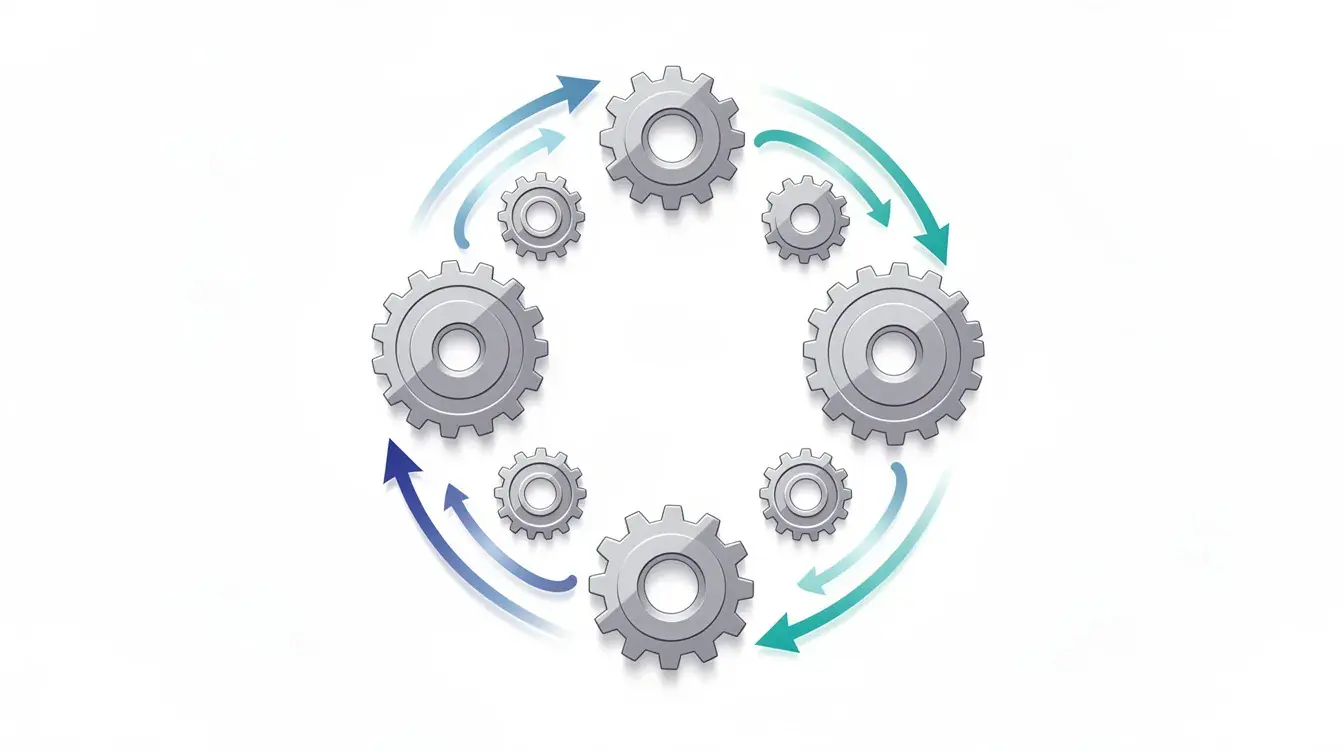
The traditional software lifecycle already includes planning, implementation, testing, deployment, support, and feedback. AI driven development does not remove those stages. It connects them more tightly.
In planning, AI can summarize customer feedback, cluster duplicate feature requests, draft user stories, and turn product intent into clearer acceptance criteria. Product managers still decide priority and scope, but AI can reduce the manual work required to prepare a good engineering task.
In implementation, developers describe the outcome they want, then use AI to scaffold changes, generate code, explain tradeoffs, and identify files that need attention. The developer becomes the reviewer and architect, not just the person typing every line.
In testing, AI can suggest unit tests, integration tests, regression coverage, and edge cases based on the change. It can also explain failing checks and propose fixes. Human teams still own test strategy, but the routine work becomes faster.
In deployment and operations, AI can summarize release risk, inspect logs, suggest rollback steps, and generate incident notes. Sensitive actions still need explicit human approval.
In support and feedback, AI can triage customer issues, group duplicates, identify product gaps, and preserve technical context for engineering. This is where Gleap is especially relevant, because the support layer often contains the missing evidence that engineering teams need.
Why Product Context Changes The Quality Of AI Work
AI coding tools are strongest when they work from real signals. A support ticket that says “export is broken” is weak input. A structured bug report with session replay, console logs, network requests, browser data, user impact, and reproduction steps is strong input.
Gleap in app bug reporting captures that context at the moment a user or support agent reports an issue. That gives both humans and AI agents a clearer starting point.
The same applies to roadmap work. A feature request with one vague sentence tells the team very little. A feature request connected to upvotes, customer segments, revenue impact, related conversations, and product usage gives Kai PM more meaningful signal to cluster demand and draft product work.
When product context is connected, AI can help answer better questions:
- Is this a bug, a missing feature, or a documentation gap?
- Which customers are affected?
- Can the issue be reproduced from session data?
- Does the fix belong in support automation, product onboarding, or code?
- What should the developer review before merging?
That is the foundation of self driving product work. The AI is not guessing from a blank page. It is operating inside a system of product evidence.
Gleap’s Perspective On AI Driven Development
Gleap is an AI powered customer support and product feedback platform for SaaS teams. The platform connects live chat, knowledge base, bug reporting, session replay, product feedback, public roadmap, changelog, and AI agents.
That matters because software work does not begin in the repository. It often begins with a frustrated customer, a repeated support question, a bug report, or a feature request. If those signals stay trapped in separate tools, the development team loses context before work even starts.
Kai Resolve helps support teams investigate harder cases and gather context before engineering is interrupted. Kai Code helps turn confirmed product issues and planned work into implementation support that developers can review. Kai PM helps product teams cluster demand and turn feedback into clearer roadmap decisions.
Together, those agents support a single loop:
- A customer reports a problem or requests an improvement.
- Support and product context is captured in Gleap.
- AI helps triage, cluster, summarize, and investigate.
- Engineering receives richer context instead of a vague ticket.
- Developers review AI assisted plans, code, tests, and pull requests.
- The product ships an improvement and communicates it back through changelog and roadmap workflows.
That loop is why we describe the category as self driving development. The value is not only faster code. The value is less lost context between users, support, product, and engineering.
Key Capabilities To Look For
Modern AI driven toolchains should help teams across the full product workflow. The core capabilities are easy to recognize:
- Code generation, for scaffolding services, writing tests, connecting APIs, and accelerating routine implementation.
- Test generation, for better coverage and faster regression checks.
- Intelligent review, for style, security, performance, and product requirement alignment.
- Documentation support, for release notes, API updates, and internal summaries.
- Observability context, for logs, session replay, console errors, and user behavior.
- Feedback intelligence, for duplicate detection, impact analysis, and roadmap clustering.
Gleap complements general coding tools by supplying product context. A generic code assistant can help a developer move faster. A connected feedback layer helps the whole team decide what should be built or fixed in the first place.

Benefits And Risks
The benefits of AI driven development are real when the operating model is mature.
- Teams spend less time on repetitive implementation and documentation tasks.
- Developers get better first drafts for tests, refactors, and reviews.
- Support issues move to engineering with richer context.
- Product teams can cluster feedback and identify demand faster.
- Release communication becomes easier because AI can summarize what changed.
- Smaller teams can experiment more often without losing control.
The risks are just as real.
- AI generated code can introduce security problems if it is merged without review.
- Agents can misunderstand business intent when the task is vague.
- Poor source data creates poor output.
- Broad tool access can create privacy, compliance, and operational risk.
- Teams can accumulate technical debt if they optimize only for speed.
- Developers can lose skill if they stop reasoning about the work and only accept suggestions.
The answer is governance, not fear. Define permissions, require pull requests, run tests, document AI involvement, and keep sensitive decisions with humans.
How To Start Safely
Teams do not need a massive transformation program to begin. Start with low risk workflows that already have clear inputs and review paths.
In the first month, clean up your knowledge base and enable structured bug reporting. Make sure support agents can capture screenshots, session replay, console logs, and user context without asking customers to reproduce everything manually.
In the second month, connect feedback and feature request workflows. Use product feedback software and a public roadmap to group demand, clarify priorities, and make product decisions easier to explain.
In the third month, pilot AI assisted engineering workflows. Let an agent draft specs, tests, and implementation plans from real customer context. Keep humans responsible for final scope, code review, security, and release approval.
Measure the full loop, not only developer typing speed. Useful metrics include lead time for changes, percentage of reports that need follow up questions, duplicate bug rate, time to reproduce, support resolution time, roadmap feedback closure, change failure rate, and customer communication speed.
The Future Of AI Driven Product Teams
AI agents will become more capable over longer horizons. They will remember context across projects, coordinate with other agents, inspect codebases more deeply, and connect product telemetry with engineering workflows.
New roles will follow. Teams will need people who are good at context engineering, AI workflow design, support operations, prompt review, model evaluation, and product quality control. Senior developers will spend more time judging architecture and less time typing boilerplate. Product managers will spend more time defining intent and less time manually sorting feedback.
The teams that benefit most will not simply buy the newest model. They will build the cleanest feedback loops.
Ready To Close The Loop
AI driven development is not about handing your roadmap to automation. It is about giving your team better context, faster first drafts, stronger review workflows, and a shorter path from customer signal to shipped improvement.
Gleap brings AI support, product feedback, bug reporting, roadmaps, changelog communication, and engineering context into one platform. Start with Kai Code, explore Kai Resolve, or see how Gleap helps teams build the broader self driving development loop.